
Transform a lawn into wildflower hay meadow
Planting Wildflowers in your lawn will attract butterflies, birds, bees and wildlife of all kinds into your garden. Human visitors too. Especially older folk who can remember wildflower meadows, poppy fields, cornflowers and chewing on a stem of wild grass! They will like it and reminisce about those days.
Kids who have never rolled around in wild grass will love it too.
A wildflower lawn is easy to grow, low maintenance and beautiful when in full flower. Requiring mowing only about twice a year, more about that later.
- How to convert your lawn, or even a border into a mini wildflower meadow.
- How to Prepare the ground for sowing wildflower seeds in an existing lawn.
- Sowing and creating a Hay-meadow from scratch.
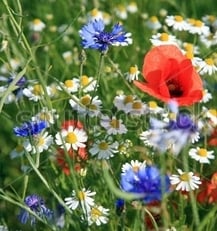
What is an English wildflower hay meadow.
A hay meadow was an area of grassland that was grown for hay to feed the farm livestock over winter. The grass was cut for hay in July and August, by then the wildflowers and grasses would have shed there seeds to reproduce the following seasons display of wild flowers. The cows were then allowed back into the freshly cut meadow to graze through until early spring. In severe winters most farmers housed the herd and fed them with the hay.
Can I turn my lawn at home into a wildflower hay meadow?
YES YOU CAN> Here's how to convert your lawn, or border even, into a mini wildflower meadow;
First Four things to consider;
- Size of the meadow area can be as large or as small as you want it to be.
- Existing grass lawns can be over-sown with a mix of wildflower and grass seeds, wildflower seed mats or planted with plugs, see below.
- Bare ground. Wildflower meadow can be created from scratch by preparing the ground for sowing seeds, or laying turf impregnated with wildflower seed. All explained on this page.
- A must do....is to work out the type of soil in your garden. Some wildflowers and grass grow best in certain types of soil.
- Wild-lawn, You could Just let your lawn go wild.
Also worth reading. A little bit of the history of wildflower meadows, what is a wildflower meadow, what they were used for and how they were maintained covered in my article further down on this page.
Changing an existing lawn into a wildflower meadow
Traditional wildflower meadows can contain up to 100 species of flowering plants. Some competing with the grass and this is why chemical dependant farmers have destroyed traditional hay meadows.
The grass and wildflowers you can sow, or encourage naturally over a longer period, depending on which method you choose, will depend on the type of soil in your garden. Some wildflowers prefer clay, some sandy, some saturated and some dry, but all prefer poor soil.
Further down this page I have listed wildflowers and the types of soil they grow best in. Including acid soil, sandy soil, loam, clay sole and saturated soil and the silty soil found on the banks of wildlife ponds and streams.
The wild flowers you choose, whether you are transplanting container grown wild meadow flowers, or sowing wildflower seeds must suit your type of soil. Acid clay, Chalk or Sandy soil.
The best position in a garden to grow a wildflower lawn
Like most flowers and grass you're meadow plants will grow best in an open, sunny, non shaded position in your garden. However, it is not a problem if your garden is mostly shaded you can purchase and sow hedgerow and woodland plants or seeds that will tolerate shady areas. In fact, if the wildflower lawn extends into trees or a wildlife hedge, grass banks and stony areas, etc. the greater the diversity of the grass and wildflowers you will be able to grow.
How to sow wildflower seeds in an existing lawn.
Unless the soil has been saturated with fertiliser or the lawn contains Rye grass you won't need to remove the existing turf. Most domestic lawn grass is not that vigorous to be a problem, but it is helpful to reduce competition by existing grass anyway by sowing "Yellow Rattle" seed into the lawn. It is parasitic on the roots of grass, and once established will reduce the growth of the grass by about 50%. Yellow Rattle grows naturally in all established wildflower meadows and is sown between August and December as it needs a period of cold to germinate.
How to remove Ryegrass from a lawn. When converting an existing lawn you will need to remove all trace of rye-grass as it is vigorous and will compete with your wild flowers. You can't use weed killers because they are not selective and will kill the other grass.
The only option is to meticulously dig the ryegrass out by hand, making sure none is left to spread its way back into your wildflower lawn. Or, and here's the rub, remove the complete lawn and re-sow with a hay meadow mix of seeds.
Weedy lawn. If the lawn is full of weeds they will compete with wildflowers so will have to be dug out or treated with weed-killer..... Probably easier to kill of the complete lawn and seed with a wild grass and flower mix.
Mowing the existing grass. The wild lawn/wild flower meadow area needs to be cut short before planting, making sure to remove the cut grass to your compost heap.
Grass preparation is fairly easy. You will need to cut the grass very short and remove the clippings from the lawn. Then, firmly rake the area removing as much of the thatch as possible to create open areas where seeds can get to the soil and germinate.
Planting and sowing wildflowers in a lawn
How to introduce wild meadow flowers and grass into your lawn;
- Transplanting wildflowers. The transplanting method will be time-consuming and more expensive than seeding, but will speed up the appearance of wildflowers growing in your lawn. Do not take plants from the wild.
- Sowing seeds directly into your lawn. This way is a bit slower than transplanting ready-grown plants, but achieves the best results in the long run and is relatively cheap.
- Use meadow lawn turf or a seed mat. Wildflower Seed mats are suitable for small areas of lawn and borders they are biodegradable mats already sown with a mix of flower seeds. For larger areas you can purchase special wildflower meadow turf.
- Wildlawn. Let the lawn go wild and seed naturally. This could appeal to folk like me who don't particularly like spending Sunday afternoon mowing the lawn.
More about each of the methods;
planting wildflowers in a lawn.
The transplanting method will be time-consuming and more expensive than seeding, but will speed up the appearance of wildflowers growing in your lawn.
Transplanting meadow wildflowers from pots or plugs directly into your wild lawn is the quickest way to establish wildflowers into your wild lawn. They can be bought online as pot plants or as plugs and planted directly into an existing grass lawn.
Do not take plants from the wild.
Try to mix the species and plant the wildflower plants informally, as if seed had blown in on the breeze. Depending on your budget, plant as many as you can for a quick effect. However, they will reseed anyway in the autumn after flowering eventually covering the whole wild flower lawn.
Container-grown wild flowers can be planted out in autumn to establish over winter or planted in early spring before the grass has grown to tall.
Important. The wildflower plants you choose will need to be suited to the type of soil in your garden. Work out the type of soil in your garden.
Sowing wildflower seeds into an existing lawn.
This way is a bit slower than transplanting ready-grown plants, but achieves the best results in the long run and is
relatively cheap.
Select a mix of
Wildflowers and Grasses that will thrive in the type of soil in your
garden. Follow the sowing instructions on the packet.
Sow a wildflower mix that suits your type of soil, at 1.5g per square metre. Then rake the area over after sowing to help the seed into the soil.
As the seedlings start to show in the late autumn or spring, you will need to give your new wild flower lawn a mow, setting the blade fairly high to about 3in, this allows light to reach the emerging seedlings.
In the following seasons your wild flower lawn should be left to grow to its natural height, to allow the flowers to naturally spread their seeds. More about this later. Click the pic to see range of seeds.
Pre-seeded wildflower meadow mat.
Wildflower Seed mats are suitable for small areas of lawn and borders they are biodegradable mats already sown with a mix of flower seeds. Therefore, all the hard work is done for you. Instructions vary depending on the supplier and type of mat, but couldn't be easier, Prepare and rake the planting area or border, roll out the seed mat, cover it with soil and keep it watered.
For larger areas you can purchase special wildflower meadow turf. I have explained how to prepare the soil for turfing toward the bottom of this page.
- Place the seed mat where you want it to grow cover with a little soil or compost, and water - and you will get flowers in a few Months, create a perfect wildflower meadow in your garden with minimum fuss and digging
- Makes the ideal habitat for bees and butterflies when in flower - makes your garden a home for them
- Contains over 40 varieties of annual and perennial wildflower seeds, all pre-spaced in a biodegradable seed mat
- Can be cut to shape or size for growing in pots, or use the full 2M x 48cm mat as an insert to lawns
Wild lawn, Stop mowing the grass and let the lawn seed naturally.
This should appeal to folk like me who don't particularly like spending Sunday afternoon mowing the lawn.
Turn away now "green lawn man".
Just stop mowing and let your lawn or even a patch of lawn go wild. The grass will grow long and wildflowers will grow and colonise naturally creating, over time, a lovely wild lawn.
This method could however, take a while, but if you are lucky enough to have a wildflower meadow fairly near to you. Wind and birds natural seed distribution will speed the transformation up. If you choose to let nature turn your lawn into a wildflower lawn naturally. The first wildflowers to appear will be the low rosette type lawn weeds, including daisies, plantains and cat's ear and the creeping plants such as selfheal and speedwells.
As you're wild flower lawn or meadow establishes, the height of the grass will increase. Taller plants and wild meadow flowers will appear and in some areas of the wild lawn the daisies and other low growing wild flowers will gradually disappear.
Over the seasons airborne seeds and seeds delivered by birds will slowly begin to build up turning your lawn into a beautiful wildflower meadow. A bonus of this method is you won't need to be concerned with the type of soil you have. Natural selection will be at work in your lawn.
Preparing the ground for laying meadow lawn turf
- Completely remove the old lawn digging out and removing all existing plants and weeds, including the roots, especially deep rooting weed like dandelions. Wildflowers cannot compete over the long term with lush weed growth, so it's best to start with a completely weed-free site. Dig or rotovate the soil to a depth of at least 15cm and then follow the instructions on my lawn turfing page
- Very fertile soil, If the area contains very fertile soil you will need to remove the top 2 or 3 inches, wild grasses and wild meadow flowers grow best in poor soil. For a large area, hiring a digger will save you a lot of time and sweat.
- Important this; Work out the type of soil you have in your garden, Acid clay, Chalk, Loam, Saturated or Sandy soil. Type of soil test
- Select a turf with mix of wildflowers and grasses that will thrive in the type of soil in your garden.
maintenance of a wildflower lawn or mini meadow
Gone to mow a meadow
Leave the Grass and wild flowers on the ground for about a week, this will allow the seeds that haven't yet dropped to dry out fall into the soil. When you rake up and remove the meadow grass and wild flowers from your lawn to the compost heap, try not to carry it over a lawn or area of garden you want to keep clear off weeds. The hay will still be full of wild flower and weed seeds.
If the wildflower lawn extends into trees or a wildlife hedge, grass banks and stony areas etc. the greater the diversity of the grasses and wildflowers you will be able to grow. I have included a guide to the types of Soil and the wild meadow flowers that will grow in them on this page.
How to establish your wildflower lawn through the seasons

A read for rainy days
In fairy tales, there is always a
Prince Charming and a bad man. Sometimes in real life, Prince Charming is the bad man, or the
bad man turns out to be Prince Charming.
Please be aware, this is not a fairy tale. This book contains references to grooming gangs, sexual abuse, Gaslighting, and punishment of the abusers. Also NON-WOKE scrutiny of British
society.
A dark story of gaslighting, sexual abuse, retribution, and hope. Based on the author's conversations with Willow, a young girl hidden from Society, and with Richard an ex-soldier now working for
a covert agency The Organisation. This book tells how Richard confronts those in authority blocking Willow from the therapy she needs to escape from them and recover, he’s aware of the
consequences. But having ignored evil too often, he’s ready for the risks.
CLICK LINK FOR FREE READ SAMPLE Kindle version Paperback
Writing your first book or novel? This new website provides advice and tips to help write, edit, publish, market and promote it https://www.faircop.com/