Home Contact Puddling clay Frogs Duckweed Maintenance Pond life Bog garden Fixing leaks Pond builder Nature pond
Creating a bog garden in a wet or dry area of a garden

A bog garden is one of two things;
- Garden style choice, Bog gardens are so easy to create in an area that is constantly wet. Providing the soil in your bog garden does not dry out for longer than say a month every year, but is not permanently flooded, bog plants will thrive. It is also possible to create a bog garden in a dry part of your garden using a liner, just follow the construction tips on this page.
- Most probably you have got a soggy, boggy waterlogged garden where normal plants just won't grow. And have arrived here from my garden drainage page, looking for ways to utilise and plant up a soggy waterlogged bit of garden.

- If you have an area in your garden that is permanently wet or waterlogged, turning a wet soggy problem into an attractive and colourful area is fairly simple, plant bog plants that will thrive in wet soggy soil conditions.
- If the area is permanently flooded, it will need to be partly drained by diverting the water into a drain or soak away.
- Can I also create a bog garden and grow bog plants in a dry area of my garden? Yes even if the area is mainly dry building a bog garden in a area that dries out for longer than say a month every year is possible it just takes a bit more planning and work, bog plants wont thrive in dry soil.
How to make a bog garden in a permanently wet area.
Providing the area where you are going to plant bog plants isn't flooded, stagnant or smelly. It is really easy to select bog plants and create a bog garden. Most plants are the same marginals you see around the edges of garden ponds and I have listed a few lower down on this page.
- Planting plan. The same rules apply, as for planting flower borders. Plants look better in groups with the taller plants at the back, low growing in the middle with the ground cover plants in the front.
- Select plants to tolerate sun or shade. When selecting plants check tolerance to shade and position the bog plants appropriately.
- Hard Landscaping, can be as simple or as complex as you want, Simple is probably best, let the plants be the main focus. Timber Bridges can look good and add interest. Stepping stones placed through the bog area will make it easier to plant and maintain your bog garden without getting covered in mud. The stepping stones will also stop the wet soil getting compacted by footprints.
- Seating area. If you are going to include a paved area for seating. Bear in mind on warm evenings the bog area will attract those irritating little insects known as Gnats On the plus side though, the bog plants will also attract more welcome wildlife for you to sit and watch.
- A bog garden will not solve your water-logging problem, but it will make the boggy area look better, interesting and usable.
Creating a bog garden in a dry area.
- It might be a good ideal to build a sensibly sized area at first. You are going to have to purchase bog plants to fill it and they are not cheap to buy.
- You will also need to keep it wet and if you are on a water meter it all adds up. You can always enlarge it by simply adding more liner the following season and by then you will have mature plants that can be divided up.
Line the area with pond liner. Any old liner will do, as you are going to pierce it anyway.
- Place the liner into the dug-out area making sure the liner covers all sides and base. Leave a slight overlap over the top. This can be trimmed of later.
- Pierce a few holes into the base, Don't pierce the sides. You want to keep the moisture within the area you have dug out to save water and keep the area around the bog garden dry.
- Fill the area with a mix of topsoil and compost. Mix the soil you have dug out with garden compost, rotted leaves or any green matter. Shovel the soil back over the liner to just below the top of the pond liner.
-
Sandy soil lacks the nutrients for plants to thrive and will definitely need green matter mixed in.
-
Clay soil needs less organic matter added as it is already rich with the nutrients plants need too thrive.
If you are building your bog garden to add to an existing fish pond. Overflowing the pond when topping up will keep the area damp and wash nutrients from the pond into the bog garden.
Caring for bog plants.
When the bog plants start to grow in spring, feed them by adding more compost or other green matter to the surface, don't dig it in, the worms will take it down into the ground.
If the garden is part off or next to a pond with fish. Over flowing the water will take some of the waste from the fish into the bog garden soil, best of both world, filtering the pond and feeding the bog plants.
Sandy soil will need a lot more compost added than clay. Not sure what type of soil in your garden, visit my "what type of soil" page.
large area of boggy soil? It is a good idea to place stepping stones through the area. The steps will enable you to walk over the bog garden to plant and maintain your bog plants without getting covered in mud and compacting the boggy soil.
Planting bog plants in containers
A bog garden can also be created in a container, any type of planter that will hold water, plants, and soil will do.
Sleepers lined with old pond liner and filled with soil, look good and constructed to form a seat on top, have the added benefit of raised beds, if a bad back makes bending over difficult, constructing a raised bed is covered on this page of my website
Fill and water the raised bed or container and maintain the mini bog garden in just the same way as described above.
What plants can I grow in a Bog garden?
What are Bog plants?
There is an important difference between bog plants and pond plants that grow in a pond.
Bog plants are; trees, shrubs and herbaceous plants that grow in damp, wet conditions beside water, not in water.
Bog plants are planted in permanently wet damp soil. "Reaching the parts of your garden, where less damp tolerant plants won't go" Adding interest and colour to an otherwise mossy, but bare waterlogged garden.
The flowering season for bog plants is short. However, a mix of early and late flowering plants will extend the season through from May until September. The range of foliage, shapes, colours and sizes, growing from just a few inches tall to over six feet, more than making up for the short season.
My favourite bog garden plants.
Hostas, Among my favourite moisture loving plants are Hostas. They come in a wide range of colours, blue, emerald green and yellow. Try to include some with variegated leaves.
Hostas grow to between 18 inches and three feet tall with flowering spikes of bell-shaped blooms in July and August. Slugs and snails love them though, which could be a problem in a wet garden.
Irises are another of my favourites in my bog garden, I have the native Yellow Flag planted beside my wildlife pond. Some of the cultivated versions such as the striking white and gold flowered Orchroleuca can add colour to a grey damp area. Another irises I like is Purple Glory.
Lobelias with showy flowering heads are popular too, because these tall plants with tpink or red flowers will stand out even in a busy planting plan. Most Lobelia, are not very hardy and may need protecting from frosts.
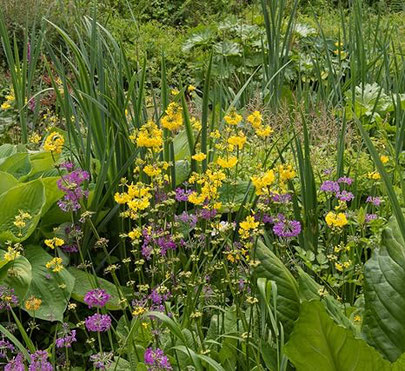
Primula. Candelabra Hybrids has stems with several whorls of flowers in many different colours from mid May into July.
Astilbe chinensis var. taquetii grows about 3½" high, with fluffy rich pink erect plumes of flowers in July & August.
Iris sibirica are popular irises for wet areas, available in a wide variety of colours with intricately marked flowers growing around 3-4ft High.
Ligularia dentata a large perennial with golden orange daisies in mid to late summer.
Persicaria bistorta is an easy plant for any soggy spot, produces several stiff spikes of clear pink flowers for most of the summer.
More unusual plants for a bog garden
I try to stick to traditional bog plants. However, if you want to try something different in your bog garden planting plan and have a lot of space, try these, Ostrich Feather Fern (Matteuccia), Giant Rhubarb (Gunnera) and Ornamental Rhubarb (Rheum)
The Ostrich-Feather Fern looks very delicate and adds a tropical look to the bog garden, with its tall feathery fronds growing up to 3ft, with a spread of less than half that, making for a very upright plant.
The Giant rhubarb plant, is one of those 'once seen, never forgotten' plants, with its massive, rhubarb-like leaves stretching out 5ft and growing up to 8ft. This bog plant needs a lot of space, so it's definitely not one for a small bog garden.
Smaller varieties include:
G. scabra which grows to a height of around 6ft.
G. magellanica grows to about 2 inch tall
Gunnera, Ornamental Rhubarb (Rheum) is worth considering It is less fussy about its growing environment, tolerating shade and slightly drier conditions.
Other plants I have tried and worth considering for your bog garden include:
'Candelabra primulas', especially Primula pulverulenta.
Creeping Jenny (Lysimachia nummularia), for ground-cover.
Bog plants are planted in wet, waterlogged, damp and soggy areas, bringing interest and colour to parts of your garden, where less damp tolerant plants can't be grown.
The flowering season is quite short, but a mix of early and late flowering bog plants will take the season through from May till September and the range of foliage, shapes and colours and sizes, growing from just a few inches tall to over 6ft, more than make up for the short season.
Have a look at this selection available from amazon, just clck on the pictures