
Drainage solutions and systems for clay soil, waterlogged gardens and lawns

A customer has asked for a favour, to put up a description of his book. Not to purchase, simply for your thoughts. However if you find it interesting and want to read more it's free from Amazon until the end of the month.
Please take a few moments to read a short description of ANGELS LOVE BAD MEN here (you wont be leaving my site)
Opportunities for garden drainage professionals to take on leads in London, the midlands and southern England. details here
What's the best garden drainage system?
I have described the main Garden drainage systems and solutions here, the links are safe to use and lead to my articles with more detailed information.
For waterlogged lawns, clay soil or flooding problems, the drainage systems described on this page or a combination will be the solution to draining the water away.
To have the work done for you see our services by clicking here garden drainage
Or to install the drainage system yourself see my garden drainage DIY guide
Use these drainage solutions to drain your garden.
Garden Drainage solutions to solving drainage problems caused by the following;
-
Underground springs causing waterlogging in the garden,
-
Surface water draining into your garden from higher ground,
-
Rainwater lies for several hours in pools on the surface,
-
The ground or lawn is always soggy.
-
Footings for extensions redirecting water.
-
A neighbour is directing rainwater into your garden.
-
Flooding from a river.
- Clay soil.

Drainage system laid under the lawn and garden can typically be built using plastic drainage pipe, gravel French drains or a combination of gravel and pipes.
Sump and Pump method.
When using plastic pipes or French drainage to drain a wet soggy garden, the water needs to be dispersed away from your garden. Providing the slopes are all flowing in the right direction this can be a soak away (not in clay), ditch or the surface water drainage system.
System to protect property from flooding.
A BUND is a tried and tested solution to protect gardens at risk of flooding.
Drawing on years of experience this easy to follow guide shows how to Install French drains.
- Marking out and digging trenches
- Finding lowest spot for positioning the Soak away.
- Materials and Quantities (how much gravel) to form the drains.
- 5 mins free Telephone back-up
- Simple easy to follow steps
- Terms
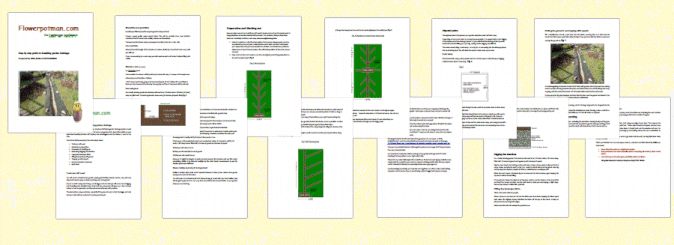
PDF normally Emailed within the hour or 8 hours if i'm out of the office

£10.00. Converted to $ and € or local currency outside the U.K
For small localised wet patches and soggy areas, these drainage tips may help
- Puddling. When rainwater water lies on the surface of a lawn for more than a couple of hours after rain its probably caused by compacted soil or clay, made worse by dips and humps in the surface of the lawn. Compacted soil puddling is fairly easy to sort out by digging holes with a garden fork or even a crowbar over the whole of the affected area and filling the holes with coarse sand or gravel. If the problem is caused by clay, this wont work, check out these pages, improving clay soil
- Soggy area or spongy lawn. If you have a soggy area that is permanently wet it can nearly always be dried out by digging out a soak away 1m square and depending on the severity up to 1m deep or if the sogginess is spread over a wider area, dig a soak away trench through the area about 18 inches wide and as deep as you can. Half fill the trench or soak away with clean rubble topped with 20 to 30ml gravel and finished with about 6 inches of top soil. You will end up with quite a lot of surplus soil, if its clay you will need to get rid of it, if its good loamy soil use it to raise your borders.
- Leveling dips that catch surface water. If your lawn has good drainage properties but puddles on rainy days, mark out the dips with bamboo canes, wait until the lawn dries out, fork over the area and fill the dips with Grit sand. Its important not to smother the grass, so leave the tips of the grass poking through the sand. This process can be repeated over the growing season, until the whole lawn is level and free of hollows and dips.
- Raised beds for small soggy areas. If the wet soggy area is limited to a small part of the garden, raising the area by adding topsoil can work. Raised beds are the best way and can be made from almost any material available, my raised garden bed explains how. If the whole garden is waterlogged, raising the level with soil does not work you would be creating a swamp. raising the whole garden can work if done correctly Before getting talked into creating one big bog read this Raising flooded garden
- Bog gardens for low wet areas.Turning the unusable swamp in a low part of your garden into a colourful bog garden planted with Bog plants that actually thrive in soggy soil works and is explained on my bog garden page.
- Using permeable paving. Permeable paving allows water to drain through and back into the ground instead of diverting it to where it will cause a wet soggy area or as with tarmac driveways that slope away from the house, onto the road causing dangerous ice traps in winter, not very neighborly. Block pavers are a good example of permeable paving.
Perforated plastic pipes for laying underground drainage system. (French drains work better)